Sunday, February 25, 2018

Promoting Creativity

Good afternoon, colleagues!

Teacher Toolkit posted an article on Thursday with 10 tips for promoting creativity. I loved what they had to say because it's essential for teachers to think "outside the box" to meet students where they "are right now." This is one of my current obsessions... I even blogged about it a few weeks ago! Because of my role as the technology specialist, I've been working on taking ideas and making them technologically realistic for my colleagues. That's what I'm going to do with this article as well!

How can you use technology to promote creativity?
  1. Project-Based Learning and Genius Hour: I think these two go hand-in-hand. Utilizing the Google Suite would be very helpful here whether it's through collaboration and discussion, building a public website or blog, using e-mail to contact teachers or outside sources, storing and sharing information through Drive, designing presentations for data and other information... G Suite can make all the difference!
  2. Create Opportunities for Creativity: Think about student choice and voice here! Adobe Spark Video is an easy way for students to be creative, but iMovie and Garageband are also great applications! Find a challenge or competition that students can join, whether it's for class or outside of the classroom. Have them share their work on their blog or through your professional Twitter. Have the students make connections outside the school that inspires them. 
  3. Make Cultural Connections: Google Arts & Culture is a great way to bring art into the classroom. ARTE360 is a VR application where you can experience, first-hand, concerts, music, and artworks. Google Maps allows you to build a "tour map" of locations you "visited" to talk about the culture of the people in that location. 
  4. Embrace Failure: Flipgrid is PERFECT for this! The reason why I would use Flipgrid is that it's video-based (instead of writing) and the students can see each others' videos. It's necessary, if your class is to embrace failure, that students can be both vulnerable and honest. The more students see others be exposed and authentic, the more open and candid they are willing to be. I think learning can be powerful when students learn from each other. They might listen to another student's failure and realize where they went wrong. Students can learn from someone else's mistakes! Students can also be the influencer for someone else!
  5. Whole Brain: This requires you to create a lesson, or unit, that taps into working, declarative, and procedural memory. You want to chunk the information, provide context and connections, and design physical actions to accompany the learning. Explain Everything is useful for using the whole brain because students can explain the links, they are physically drawing and writing while creating a video, and they have to chunk their information into a precise presentation.
  6. Create Time to Think: An application I would use here is Padlet. The online corkboard is an exceptional way for students to post questions, comments, images, or videos. Also, students can now leave comments on other students' post which is a great way for students to learn from each other. One thing I saw another teacher do was to leave the post layout as "free" so that students can move their post onto another post if there's a connection between them. It's an excellent way for students to see and design associations!
  7. Teach Creativity: Start class every day with mindfulness (there are apps available on the internet) to set the creativity tone. Use Sketches for drawing and sketchnoting. Brainstorm (or do a project) as a class over Google Docs or Padlet. 
  8. Celebrate with Pomp and Circumstance: Use social media platforms (Blogger, Instagram, Twitter, even Snapchat) to share what the kids are doing and what they are doing well. I use Instagram for my class to just post what the kids are doing. Recently a number of students have been asking about signing up for broadcasting next year. They're excited because they get to see the behind the scenes action, because they see the broadcast in class, and can catch up on missed broadcasts on YouTube. It makes my current students PROUD to be in broadcasting and proud of their accomplishments!
I hope some of these ideas are useful and inspiring! Thanks for reading. I'll see you next week :)

- Rachel
My Teacherspayteachers website

Sunday, February 18, 2018

Looking at a morale problem...

Good afternoon colleagues!  I'm posting this week about an issue (but not a problem) that I'm having in my new position... I've become a sounding board for others. I'm trying to help people sort out problems, both technological and personal. I enjoy being a sounding board and I'm shocked that people come to me for advice! But because morale is SO low at Skyview right now, the majority of these conversations are negative. It's hard to be positive when I'm surrounded by negativity.

So instead of focusing on the negativity, I'm going to provide advice. Is this a step towards positivity? Not sure, but here we go.

I have to start with what I see at Skyview that is causing low morale and poor climate.
  1. At the end of the school day, we have an advisory period called REACH. These 30 minutes are meant to be used for interventions, catching up on school work, doing homework, or checking in with enrichment classes. This year, based on state requirements, we had to make a change. REACH time, on Monday and Wednesday, is now used for extra, pre-made lessons. The problem is that the students (and teachers) were not notified much before the school year beginning. This led to animosity from tired teachers and from students who rebelled at their lack of study hall.
  2. We have too many programs going on at the same time, so it is hard to focus on what is essential. How do we mix Capturing Kids Hearts, Path2Empathy, and Marzano at the same time without overwhelming teachers and taking up precious class time? How do we also implement high-reliability math and reading strategies, new technology, and design digital portfolios?
  3. We have a good administration team that is lacking in some critical areas: transparency,  visibility, and perspective. Part of this is out of their control as our middle school is hovering near 1200 students and we are in a "choice state." I see administration spending more time in customer service than in servicing the building. They are often not transparent with the staff in WHY we are doing something, they are not usually visible in the hallways or classrooms, and they do not have the greatest perspective in what's necessary for teachers (which trickles down to students). 
  4. MEETINGS. We have meetings four of the five days of the week and have staff meetings once a month. Most of the time, it feels like we're having a meeting because we're supposed to have a meeting. It feels like forced collaboration which just does not work.
That's a lot. As a "lowly" teacher, there is not much I can do to change the climate of the whole school. I am trying, however, to change the view of using technology. My goal is to move my role from reactionary technology support to proactive technology support. I am doing this by providing technology support through the tech tips newsletter and by making screencasts for colleagues instead of requiring face-to-face meetings. I hate when my time is wasted and feel it is crucial for me to also not misuse my colleagues' time.

What advice do I have to give about these four problems?

  • Problem #1 - new REACH lessons: I genuinely believe this problem with sort itself out over time. Teachers will know that this is a future expectation, and students will be less likely to rebel over time. It won't be helped that teachers are tired at the end of the day, but students won't push back. This will trickle up into the high school as well. This year is just an in-between,  learning year. I do think that the administration needs to survey the staff at the end of the year about how it can be improved. It's not going away, so how can it be better? 
  • Problem #2 - too many programs: the unusual thing about all of these programs is that they work independently from each other. CKH is a way to build rapport with your students through greetings and dismissals and positive interactions. Path2Empathy are character building lessons that can be connected to content. I would encourage teams to split up the Path2Empathy activities so that each teacher only "loses" one day a year. And Marzano is a way to backward design your units and lessons. Is it a lot? Yes. Is it manageable? Yes. This may be another blog post for a different time, but I feel like teachers can spend time in their classrooms better and can actually prioritize their lessons differently to save time. 
  • Problem #3 - administration: This is a sore spot for a lot of the staff, and I know I need to tread carefully here as I could be written up. The administration just needs to listen to the teachers and prioritize solutions. I thought they started to do this earlier in the year when they had us do the post-it activity. Teachers were asked to write down what to start doing, keep doing, and stop doing in the school. Most teachers went all in, and of the post-its that I saw, there were some great ideas. Administration took the post-its to our leadership team, and from what I heard, the conversations were contentious, and some administrators took the discussions personally. I've heard nothing about the post-its since. When situations like this arise, teachers feel like they're not being listened to. Most teachers don't want to complain... they want solutions! I would love to see this post-it conversation continue to show that administration is listening to the staff is that the building is moving forward. I also want to see admin in the classroom more often. I read a blog post from a principal who says that she blocks an hour of time (or more) a week. She marks it on her calendar as a meeting, and for that hour, she's in classrooms. If a parent stops by, the secretary can say that the principal is in a meeting and when the principal will be back in their office. By doing this, administration could have a good pulse of what's happening in the building and in individuals' classrooms. This helps with giving feedback, helps with evaluations, and also makes their presence known to students and staff. 
  • Problem #4 - meetings: I'm not sure how to fix this issue. One thing that I've been asking for for years is a pre-made agenda. There has to be a way to replace forced collaboration with reasons for collaborating, but I don't know if I have answers for this. 
My last bit of advice is for the teachers themselves. When teachers have low morale, it leads to burnout, which then leads to teachers switching schools or leaving education altogether. How can you take care of yourself to prevent this? How can you change your attitude? I gave this advice to a colleague and friend the other day. Make a list of what's important to you. Rank everything from most to least important. My guess is that your job isn't what's most important to you, so don't spend all of your time working. I call this my "midnight rule." Like nothing good happens after midnight? Nothing good happens when you're at school past four. It can wait until tomorrow. 

Spend time doing what you love. I want to be healthy and I enjoy reading. For the past month I've been going to the gym and walking on a treadmill for an hour. It's not much, but I'm getting my 10,000 steps a day. I also take my Kindle and read while I walk. So far, I've read 16 books this year. 

Spend time with your family. Have a drink with your friends. Take a bubble bath. Purchase a subscription box. Take your dog for a walk. Light a candle and listen to music. Cheer on the US at the Olympics! Just do something for your. Take care of yourself. Thanks for reading. I'll see you next week :)

- Rachel
My Teacherspayteachers website

Saturday, February 10, 2018

"Teach Like a Pirate" book review

Hello to a VERY snowy Saturday at a great coffee shop in Colorado Springs! I was definitely MIA last weekend as I got SLAMMED with a nasty cold. I didn't get the flu (thank goodness), but I did miss three days of school. I spent four days laid up in bed (minus watching the Super Bowl). It was definitely something... But I am well rested, back to getting to the gym, and am drinking some chai tea.

I decided to change it up this week and do my very first book review! I discussed with Mari, a fellow #sunchatblogger, about blogging what we're reading. She's jumped in and created a book-focused blog! I'm not entirely there yet but did want to blog about a book that we're studying for Skyview's mentoring group. (I'm a mentor for another teacher. Have I mentioned that? I still struggle with the fact that I'm helping a new teacher, even if it is the second year of me doing this.)

ANYWAY. We're reading Teach Like a Pirate by Dave Burgess. The book is split into three parts. The first part is called "Teach like a PIRATE" (passion, immersion, rapport, ask and analyze, transformation, enthusiasm). Even though he explained that PIRATE was an acronym on the first page, I didn't read closely enough to realize this acronym until I was 3/4th of the way through the book. I kept thinking, "What does this have to do with being a pirate?" Duh Rachel. Get πŸ‘πŸ» It πŸ‘πŸ»Together πŸ‘πŸ»!

We were tasked with reading the first part before our mentoring meeting this past Wednesday. We were given a handout with discussion questions. As an introvert, I was not very excited to do a full group discussion. I wanted to discuss the book with "my people" in the building because I can easily communicate and collaborate with these people. As our whole group conversation continued, I shut down. I'll admit that I acted like a baby because the conversation did not go as I believed it should. That's a "me" thing that I have to get over.

The meeting did push me to read the rest of the book ASAP. Part two provides "hooks" to engage your students in your classroom. If a teacher doesn't walk away with one, ONE idea to incorporate into their classroom then they have <begin blunt honesty> a fixed, instead of growth, mindset. I legitimately have no other answer than this <end blunt honesty>. Part three is about "building a better pirate" which is just a way to conclude the book by looking at next steps in the classroom.

So what are my thoughts on this book? I'm going to bullet point the list because it's how I think, collaborate, and function :)

  • As an introvert, this book makes me uncomfortable (in a healthy way) as it pushes me to be more creative, innovative, and "out there" than I already am. I have to work on being more silly (I don't like looking stupid) and be more humor. On days when I'm crabby, I still need to put on a show. 
  • Dave talks about bringing personal passion into your classroom. I started doing that the last two years through sharing good news. I often talked about my photography and shared my pictures with my students. A few asked for my Instagram handle which I gladly shared. This has spilled into my current position as a broadcasting teacher, and now I take pictures of my students working on the broadcasts (and a few of them have asked to post as well!)
  • The six words: "It's easy for you. You're creative." BOOM! This spoke to me because I've heard people use these six words against me. Yes, I'm creative, but it's because I practice. It's because I'm not afraid to take risks and try something new. This section made me realize that I need to share more about my failures in the classroom. It's taken a lot of failure and mistakes to get where I am now. The last six years has not always been easy. Turns out I can "fake it until I make it." My colleagues are none the wiser, but they should be... 
  • "If your students didn't have to be there, would you be teaching in an empty room?" When I taught history, I know that some students would show. Teaching broadcast, I've heard on the regular that students come to school for my class. If I ever go back to teaching history, I would really challenge myself to make my social studies class like my broadcasting class. 
  • If you don't read the whole book, please check out part two, the "hooks" section. Dave covers thirty-two different thematic hooks with multiple ideas for each. This part is helpful for new teachers, to give them ideas, and for experienced teachers, to encourage them to refresh their curriculum. 
I am quite glad that I finished reading this book. It cemented a lot about what I've already done, and what I currently do, as a classroom teacher. It also pushed me to continue to grow and learn so that I can fulfill my promise that I made in my phone interview for Skyview nine years ago... "I am a good teacher, but someday, I'm going to be a great teacher. You want me on your staff."


Thanks for reading. I'll see you next week :)


- Rachel
My Teacherspayteachers website

Sunday, January 28, 2018

Mind. Blown.

Happy Sunday, colleagues! This past week I was scrolling through Twitter when I came across a post from Jennifer Gonzales. Of course, the title got my attention, but the article, itself, was even better.
This blog post is 2 1/2 years old but is still very much relevant. A lot of what is spoken in the blog post directly relates to my classroom and my education philosophy: 21st-century learning, real-world projects, and engagement. The part that blew my mind was the piece about how real-world knowledge is when it is real for students, but not necessarily real for teachers.

When I taught Social Studies, and I heard about making curriculum real-world, I struggled. I was frustrated with trying to explain what I considered "modern day" topics while teaching about what happened in the US 300 years ago. The closest I ever felt I got was the very last unit I developed last year when I had the students study a modern event dealing with racism and connect its lineage back to Reconstruction and Jim Crow laws. I felt so successful, and it was the last US history topic I taught over nine years.

After reading this blog post, I realized that I was unintentionally teaching real-world concepts for the last five years! I was doing so by connecting to their real-world NOW. I knew it was a best teaching practice to provide students opportunities to interact and communicate with each other. For some reason, I never thought about how beneficial it was to produce situations (or simulations) that were similar to their lives right now. Those situations/simulations are real-world for THEM (even if they're not real world for us).

What are some ways to design real-world lessons, projects, or units for our students?

  • Even though students can't vote, they are interested in today's politics. If you teach Social Studies, compare and contrast political actions in 1789 with the government today. Compare the Presidents and their agendas. How is the Supreme Court different? How is Congress different? As you continue to teach your curriculum (into the 19th and 20th centuries), discuss where the changes happened. Focus on, How did we get here today? 
  • Let students write a blog. Sometimes you can give them prompts, but sometimes, let them free write. Let them blog about what they're reading or have them blog about a recent personal Instagram post. If you want students to comment on each others' posts, have them look at vocabulary. Are there any words that might sound better than what they posted? It's a sneaky activity that expands their vocabulary!
  • Students are obsessed with Netflix! Do you want them to write a story? Have the students "pitch" their plotline to Netflix executives. Want to make the lesson even more real world? Have a panel (teachers, students, maybe even local filmmakers?!) that discuss their storylines with them, in person, in front of the class. 
  • I'm speaking here as a non-math person, but is it possible for students to study algorithms? Is it possible for them to look at how Facebook's news feed has changed (based on the algorithm)? Could they do a scientific study of how (or how often) they see a person on their Instagram feed now that it is no longer based on time of posting?
My challenge to you, this week, is to find a way to make your content more relevant to students TODAY, whether you update a lesson, add technology, or just listen to what students care about today. Thanks for reading. I'll see you next week :)


- Rachel
My Teacherspayteachers website

Sunday, January 21, 2018

Why digital portfolios?

Good morning colleagues!

I totally had another blog post planned and written, when I had an interesting conversation with a colleague over e-mail on Friday. It was apparent, through the e-mail, that the teacher was incredibly stressed about helping their students with digital portfolios. Our district decided to implement digital portfolios, this year, using Google Sites. My principal started with a rotation where all teachers ended up in a lab, or with a Chromebook cart, to help their students create the skeleton of their digital portfolio.

I had a meeting with my principal a couple of weeks ago where another colleague and I insisted that yes, the staff could quickly get one item on all of their students' portfolios before STUDENT-LED parent-teacher conferences on February 15th and 16th. That's still four weeks away... that is entirely possible. I will admit that I told my principal to mandate it. I did. I'll own the teachers' frustration, but it's because I believe in digital portfolios.

Now some colleagues may be reading this post, gritting their teeth, thinking, "Rachel. Stay in your lane. Stick to what you know -  technology." I don't believe in digital portfolios just because the students are using Google Sites. I support creating digital portfolios because it gives students a straightforward way to demonstrate voice and choice!

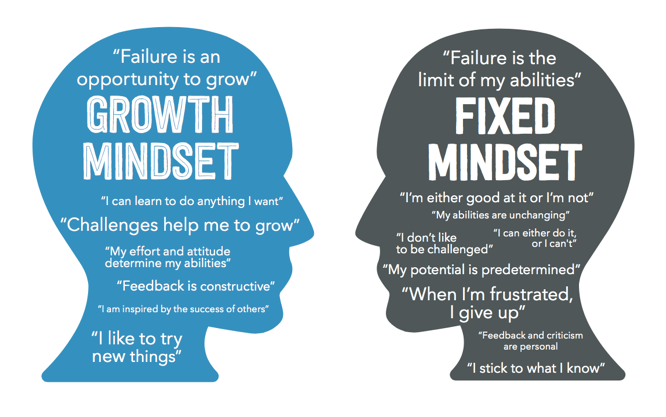
I believe in student choice and voice, and I back growth (versus fixed) mindset. It can be incredibly challenging to give up control of your classroom, give students options, and try to get them to change how they see school. I honestly feel like digital portfolios is a great start to all three! Students get to design their portfolio how they see fit, and they get to add what THEY want to their portfolio. They can choose to showcase a test, a project, or an essay. It's whatever they think best demonstrates their growth for the year.

What's been troublesome for our staff is that the "buy-in" part did not go over well. Teachers didn't see the point of doing digital portfolios. Based on what I heard, people thought it was one more thing, and it would just go away. It seemed as though they couldn't fathom portfolios becoming seamless with their curriculum. Does it take time away from class to have students put work on their portfolio? Of course. Does their work become meaningful when you not only give them time to place work on their portfolio but also thought-provoking questions to reflect upon their work? YES. I could continue to blog on and on about why digital portfolios are essential, but I'm going to let Global Digital Citizen Foundation do the work for me.

What has also been problematic for the staff is the lack of training. I've realized, over the last six months, why I was so good for the job I currently have: I'm not afraid to push a button to see what happens, I'm not worried that I'll mess up the technology, and I'm quite good at using Google. Apparently, this is not normal! Who knew?! So in this meeting with my principal, where I somehow managed to throw my colleagues under the bus, I also offered to provide training needed for the staff. I created a Google Form that asked what my colleagues needed and even asked when they wanted to meet. Seems good in theory right? Only 14 teachers filled it out. So this afternoon I'm going to make my training materials for those fourteen teachers. I have a starting place :)

Digital portfolios are nothing but good for students. I even did a little research on pros and cons, and this is the best I could find. I think digital portfolios are useful for teachers as well. I started a digital portfolio this past summer and have been continuously updating it. As an introvert, I don't share a lot about myself verbally. I've realized that I share a lot more about myself online. It's pretty humorous that I see less risk in sharing who I am with strangers than with the people I see every day at work. It's because I'm not "putting myself out there"... I'm not having to open my heart and be vulnerable. My digital portfolio is a window into who I am, what I like, what I'm reading, and what my students are doing.

The end game, in our district, is that students will start their portfolios in kindergarten which will follow them through twelfth grade. That is a lofty goal but is one that I think is possible. Seriously think about it. How cool when they graduate that they have this thing that demonstrates their growth and learning over thirteen years. And this thing can help them get into vocational training, college, or get a job. It may be nerdy, but I just think that's neat! Purposeful learning.

Thanks for reading. I'll see you next week :)

- Rachel
My Teacherspayteachers website

Saturday, January 13, 2018

What's the point of social media?

Good morning y'all!

I have a lot of thoughts swirling in my mind this morning, stemming from a 7:30 am wake-up call with a technology question from my mom's best friend, to news out of Silicon Valley about Facebook, and a great post from a friend and colleague, @aadamsELA. All three of these things have one common connection: social media. I'd love to quote BeyoncΓ© when she says, "Who runs the world? Girls!" because, really, social media runs the world.

I am not immune to this - I love social media as much as the next person. It can be a time sucker if you let it. But it all comes down to how you use social media in your life. That's the focus that I want for this post. What's the point of social media? To me, social media comes down to the desire to make and share who you are and what you do.

Facebook: I deleted my Facebook two years ago, and I haven't looked back. People that know me might say, "Wait a minute..." Yes, I have access to my husband's Facebook. Yes, I have a Facebook page for my photography. But the account that I started in college, in 2004, no longer exists. I do not spend my time mindlessly scrolling through everyone's lives. I do miss catching up on my friends and family's lives, but it wasn't worth it for all of the ridiculousness. I am SO glad that I didn't have Facebook during the election.

Twitter: I have my professional Twitter that I use for all school-related things. I am 100% appropriate and non-political. I've curated a great PLN and have made some fantastic connections. I also have a personal Twitter that I use all things NON-school related. I am 100% inappropriate and overshare my political views. Only friends follow me - it's basically become my Facebook feed had I still had one. It is not a watch to catch up with me but instead is a way to be annoyed by my "know-it-all" behavior.

Snapchat: This is arguably my favorite social media app because I enjoy taking pictures of my day and being stupid. I love that the pictures disappear after 24 hours! You don't need, forever, to see a video of my cats chasing a spider, or me making espresso in the morning, or of someone's car with a Hawkeye sticker in a parking lot. I have some family members and close friends on Snapchat and even have a sisters chat going. This is what I use instead to keep in touch with others while also letting people know that I'm alive and okay in Colorado.

Instagram: This is 100% professional. I only post my photography, and if I do a live story, it's while I'm out shooting. I follow other photographers so that I can learn from the best. I probably use Instagram "wrong," but it works for what I need it to be - a platform for curating and sharing photography. I would also liken it to Redbubble which I use to share and sell my photography. I did recently start an Instagram for my broadcasting class. I am using it to share behind the scenes images of what my kids are doing. I would like my students to take it over, but they haven't gotten excited enough about it... yet...

Goodreads: This is also one of my favorite social media platforms, but not many people I know are on it. That's because most people don't have (or don't take) time to read! If you don't know what Goodreads is, it's an application where people post what they're currently reading, can read (and post) reviews of books, and can be recommended books. They also have a reading challenge (last year I read 54 books) where you can challenge yourself to read a certain amount of books. What's cool is that I see what people are reading, look at the plot, and decide if I want to read it too. I've found a number of books that I would not have found (and read) otherwise. I also like that I've been on Goodreads since 2011 so I can reminisce about what I've read in that time frame.

Spotify: This is probably the most used app on my phone. I listen to music while I get ready in the morning, on the way to work, at work, on the way home, and before I go to bed. We got a Google Home in September, so we also listen to music while we lesson plan or work around the house. I like seeing what people are listening to and enjoy sharing my playlists with others.


So with that, I encourage you to think about your social media accounts and how you use them daily. Is there a purpose? If you believe so then keep it up! If you don't, ask yourself why you don't delete your account. Thanks for reading. I'll see you next week :)

- Rachel
My Teacherspayteachers website

Saturday, January 6, 2018

#oneword2018

Welcome back, colleagues! How are we feeling after the first week back? Are you chugging coffee? Do you have a headache? Are you hoping for your first snow day of the year?

As I INHALE my coffee this morning, I'm reflecting on last year and setting goals for this year. Last year, my #oneword was self-care. I was really struggling with my then job. I was over-working myself, so I was not taking care of myself. I was having quite a go and found myself interviewing for jobs for three years. It made sense, then, that I needed to take care of myself. Thus I began blogging about self-care. It helped. It really helped that I got a new job (and desperately needed change), but I discovered how to relax and what I needed to do to take care of myself.

It was evident that my #oneword2017 was complete and I needed to pick a new word for the year. Which one did I come up with?


I've always been a pessimist, "negative Nancy." I am cynical. I look at a situation and scoff. I make jokes when I'm uncomfortable and make others laugh, at inappropriate times, when sitting in meetings. I'm the "bad" kid that people don't see coming. I know in this new position that I need to be better - I need to just, and I quote, "Look on the bright side of life." So how do I do this? How can I be more positive?


I can't promise that I will behave during meetings or when I'm uncomfortable. That's asking a lot of me.


But I need to find positives every day that can help me more optimistic and thankful for the good things that happen. I was inspired to do this when, of all things, I was trolling Buzzfeed. You know, sometimes, I just need to take another quiz to remind me that I AM a Gryffindor! Anyway, I was reading about new years resolutions and getting organized when I stumbled across a post about bullet journals. In my definition, a bullet journal is a way to quickly journal every day. You make it personal to you, whether you are tracking habits, food, health, or you need to vent or you want to doodle each day. It's keeping a diary but without a ton of writing each day. That's what makes a bullet journal something desirable to me... it doesn't take a lot of time or effort. I don't have time for that!


So I am committing myself to "journaling" once a day. Most of the time it will be me sketchnoting something positive that happened that day. It won't be much doodling as I love writing in different scripts with a variety of pen colors. It doesn't have to be anything significant - just something funny, cute, or happy that happened. The other day, for example, I was e-mailing a teacher back and forth about a student and parent. In the end, I e-mailed a rolling eye gif. That was the entire e-mail. How it became positive was when the teacher made a point to find me after school to tell me how funny she thought it was.


That's a positive!

Thanks for reading. I'll see you next week :)

- Rachel
My Teacherspayteachers website

Sunday, December 17, 2017

5 most popular posts of 2017

Hello colleagues!

As I enjoy a hot cup of coffee in a quite cold Park City, Utah, I am reminiscing about this past year. I started blogging a year and a half ago, but 2017 was the first year that I had a full year of blogging! I still can't believe that I was able to come up with so many thoughts and be able to share them with all of you!

A few weeks ago, I was trolling Twitter. I came across a post from Catlin Tucker where she shared her top blog posts of the year. I instantly knew that I would do the same thing for my final "column" of the year, especially considering that this was my first year where I COULD share my top five posts of the year.

#5: Elevate. In this post, I wrote about how I was applying to become a Google Innovator and wanted to bring my idea into my classroom. I worked with my Language Arts counterpart to elevate and improve a long-standing project between the 8th grade Language Arts/Social Studies departments. Instead of doing another research essay (of which we had already done three that year in history alone), we had the students 1) research a Civil War figure, 2) participate in a Wax Museum project, 3) discover a characteristic that was best exemplified by this person, and 4) design and implement a community service project where they illustrate that same trait. We elevated the project and RAN with it!

#4: Taking risks. In this post, I wrote about stepping out of my comfort zone and applying to become a Google Innovator. Spoiler alert, I wasn't chosen. But I have another good idea for the application in the next round. We'll see! 

#3: Give the kids homework this weekend. In this post, I wrote about meeting kids where they are in the 21st century. This included trying to incorporate Snapchat into the classroom to have students tell stories. The end result is to try to build a comfortable community with your class. 

#2: #selfcare. In this post, I wrote about how I figured out what my #oneword2017 would be - self-care. It was the moment that I decided to make some changes in my life so that I was no longer overwhelmed by being a teacher. 

#1: Sharing My Love for Screencastify. In this post, I wrote about how I was using Screencastify in my new job. I love this app because it is SO easy to use and it is a good use of my time! If you haven't used Screencastify with your students, I strongly encourage you to do so.

Thanks for reading this post and all post over the last 18 months! I will be back in 2018 with a new post and a new #oneword2018! Happy holidays everyone :)

- Rachel
My Teacherspayteachers website

Saturday, December 9, 2017

#selfcare: hype videos

Guys, I don't know about you, but I'm TIRED. I know that I've had more breaks than most of you, but I am running on empty.

Teachers spend most days running on empty, right? That's why self-care for teachers is SO. DARN. IMPORTANT.

There is a multitude of ways to take care of yourself, but for me, my #1 way to take care of myself is to listen to music. I've shared multiple playlists throughout the year. Sometimes, however, it's more than music. Sometimes I need to cry or laugh or be inspired.

And that's what YouTube is for. YouTube is not just for your students, folks. There is some phenomenal, non-school related stuff out there.

At times like this, when I'm running on empty, I try to figure out the best way for me to move forward. Often times, I need to cry. Not just a little bit... I need to let out gut-wrenching sobs. I realized this morning, for example, that I needed a good cry to start my day. Please view this entry from ESPN talking about my beloved Iowa Hawkeyes.


Did you cry? Good. Do you feel better? I hope so. 

So, here is a playlist of my favorite YouTube videos to hopefully make you laugh, cry, or inspire the buh-jeezes out of your last few days before your winter holiday.


YouTube can also be for your students. The past couple of years, before I taught 45-minute short enrichment classes, I would show my students videos on Friday, called "Fun Video Friday." I would encourage you to put together a playlist, with your students, of some of your favorite videos. When you or your students need a break, sometimes a quick three-minute video can change your students' or your mood, or just change the climate in the classroom.

Thanks for watching. I'll see you next week :)

- Rachel
My Teacherspayteachers website

Saturday, December 2, 2017

Student Voice and Choice

Greetings colleagues!

When I started this new job four months ago, I was pretty terrified. I try to be organized and polished whenever I teach as I am NOT someone who flies by the seat of my pants. Teaching broadcasting was a WHOLE new thing, and I was making it up as I went for most of the first quarter. I now feel way more comfortable in this role as I'm figuring out what I want my students to know and do.

As a Social Studies teacher, I was always grasping for "wins" - good days, good class periods, and good moments. They did not often happen as I was a pushy teacher. I had high expectations. Students didn't get to goof off very often in my class. But now I'm a "fun" teacher - I still push and still have high expectations, but students get to goof off (ish) in my class. Students get to have fun because they are making up stories, they are creating videos, and they have an audience ready for their broadcast every week. Talk about student CHOICE AND VOICE!

I really thought about this the other day when a student said to me, "Mrs. Jeffrey - look at the board. You put the four of us (students) together. No other teacher would EVER do that!" I said to him, "Well, you do your work for me. If you were together in another class, would you not get anything done?" He said, "We don't have classes together, but I bet we wouldn't get anything done." So I said, "Every week you have to create a tangible product. If you don't get your work done, then you don't have anything in the broadcast." As I walked away from him, I heard him say to his colleague, "I've never thought about it that way before." WINNER WINNER CHICKEN DINNER!

I will totally own that it's completely different being an enrichment teacher. I get to make up my curriculum because I have incredibly open standards (in fact, there are no broadcasting standards... I use Language Arts and theatre standards). This allows me to give students more choice and voice throughout the year. I really struggled with giving students voice and choice when I taught Social Studies. It's a difficult thing to do!

So how can you give students choice and voice in your classroom? Here are some ideas...

One time that I always tried to give students choice was when I had an "open era," i.e., we're covering between 1810 - 1860. I would want to know what they wanted to learn about and I wanted to know which applications they wanted to use. This was a perfect time to use a tic-tac-toe board or dinner menu. It wasn't entirely open-ended, but students had more say in their work.

For each broadcast, there is always one entirely original video. I give students theme options, but the main idea, the story plot, the script, the camera shots, and music are solely the students' creation. They can be quite fun to watch. For the rest of the segments, I often choose the topic, but sometimes I don't hear from staff members, so the students get to design their own themes. Even though the structure is set, students still write the script, design the camera shots, and create music. I always get to see and hear their voice throughout, and they still have choices along the way.

Find a way to make student's work public. This can happen at your own school! A brag board is where you have a student post their work and write about why they're proud of this work. Pair up with another class (whether on your team or not), and have them visit your brag board, look at the student's work, and leave a comment. This could be on a cork board in the hall or through a digital Padlet. Let the students be proud of what they've done so that other students can be proud of them too!

Our school has an advisory period, so each class shows the broadcast every week. I also post the broadcast on YouTube and try to remember to tweet out about it as well.


Let your students speak, both figuratively and literally in your class. Let them share their voice. But give them a choice in what they want to say as well.

Thanks for reading. I'll see you next week :)

- Rachel
My Teacherspayteachers website